Telling time
Telling Time Worksheets
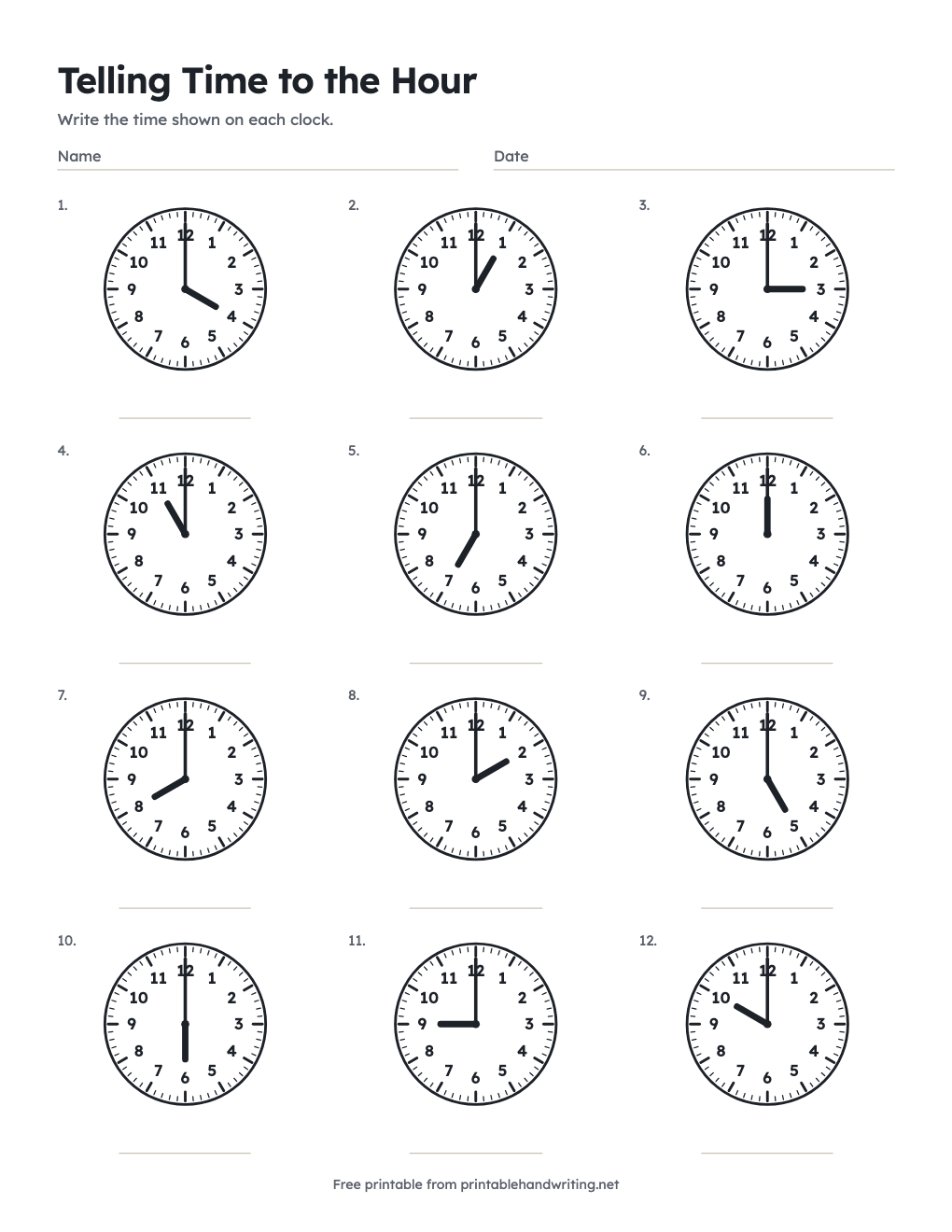
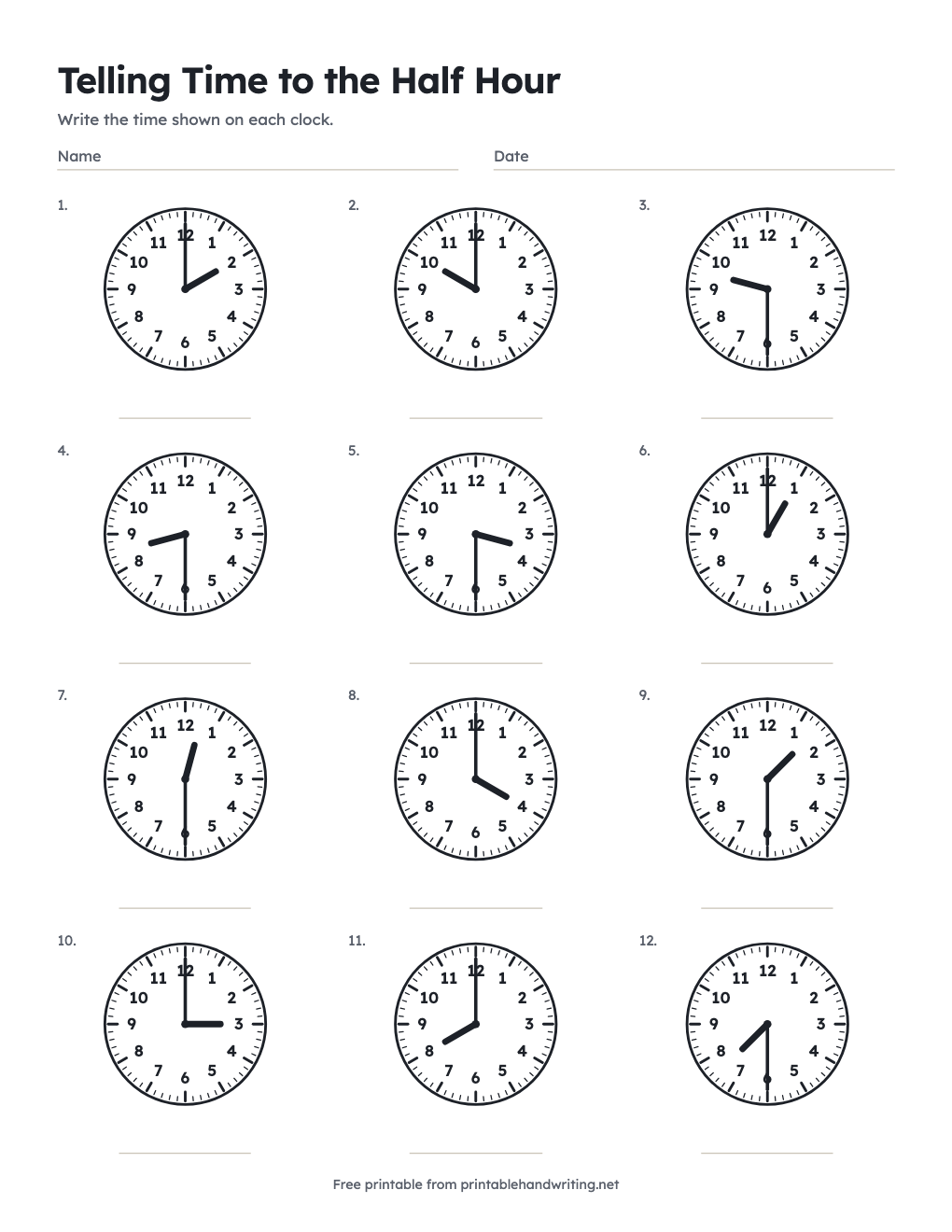
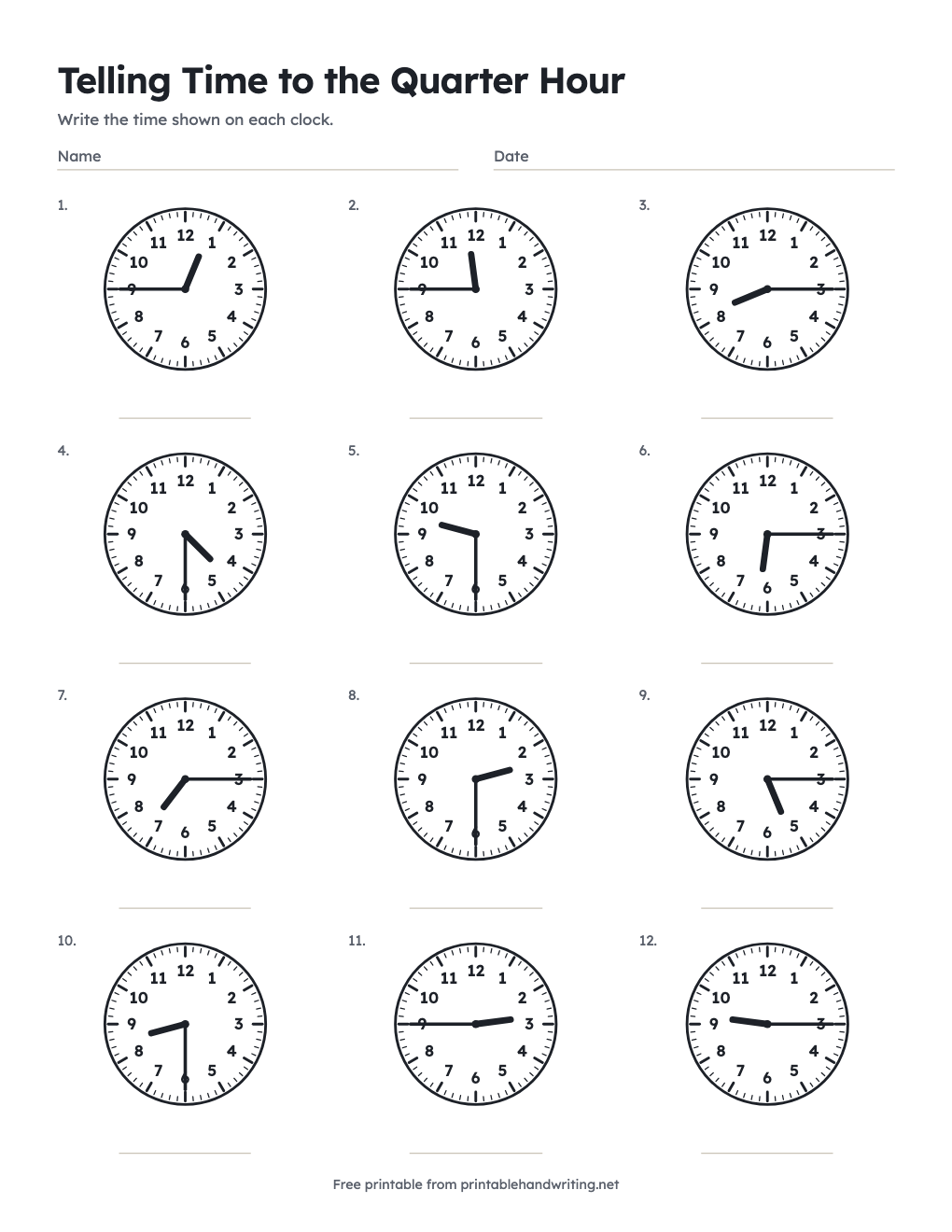
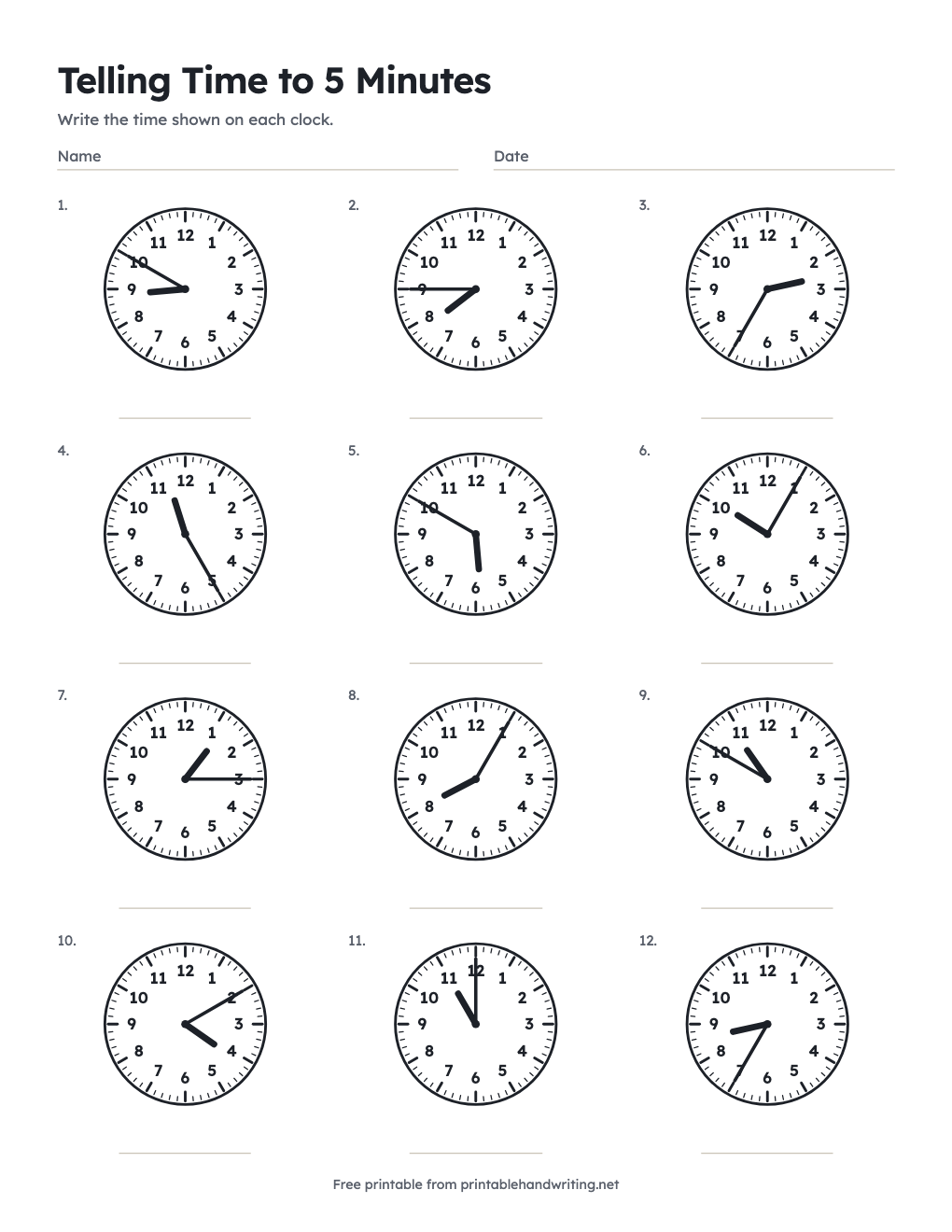
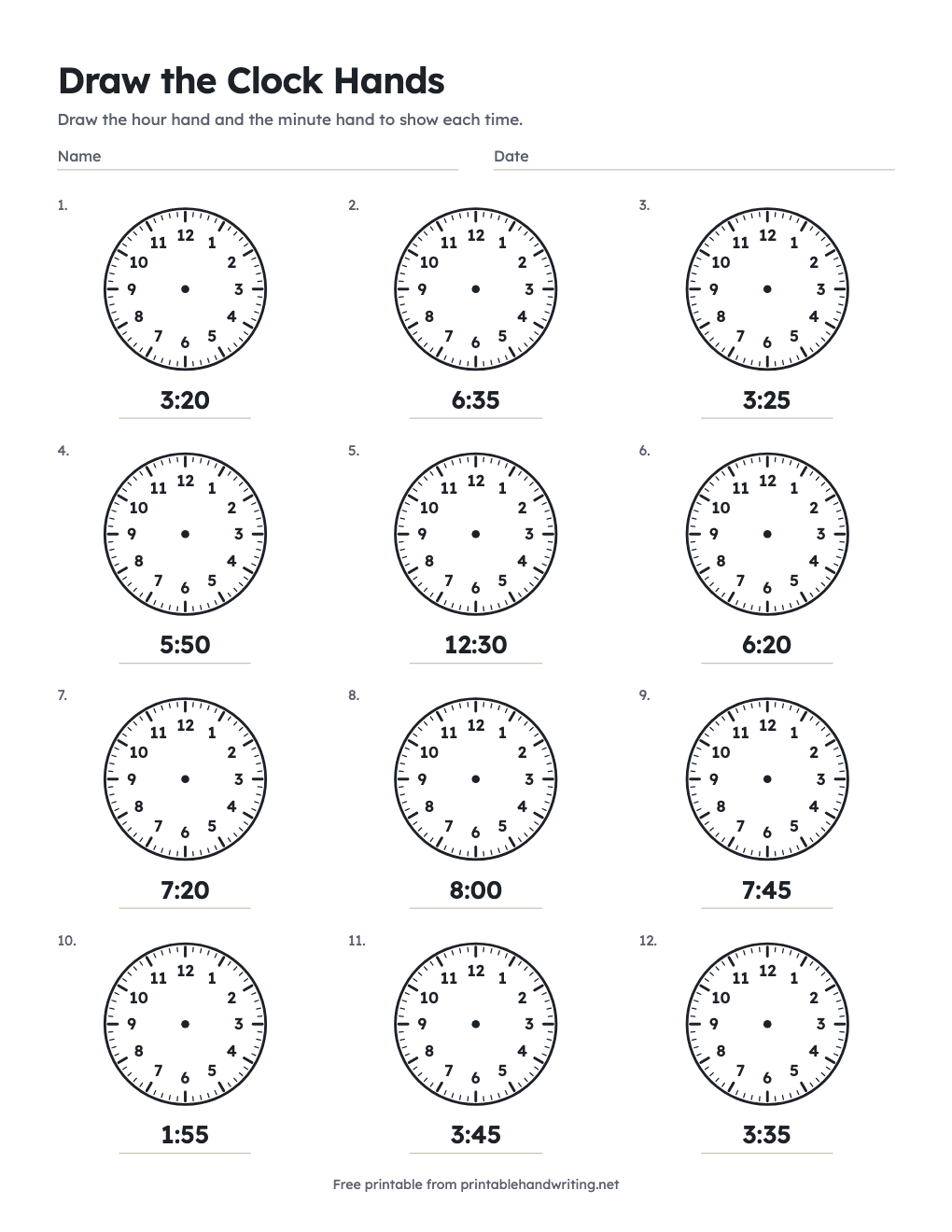
These free telling time worksheets build the skill in the order it is usually taught: to the hour, the half hour, the quarter hour, and then to 5 minutes, followed by drawing the hands for a given time. Each sheet has 12 clocks and an answer key on its second page. Use the clock below to show how the hands move before printing.
3:15
quarter past three
Step the clock and watch how far each hand moves. The hour hand creeps toward the next number as the minutes pass.
How to read an analog clock
- Find the short hand, the hour hand. Read the number it has just passed: that is the hour.
- Find the long hand, the minute hand. Count by fives from the 12 to the number it points at: at the 3 it is 15 minutes, at the 6 it is 30.
- Say the hour, then the minutes: the hour hand just past the 3 and the minute hand on the 6 is 3:30.
The order to teach it
| Step | What to look for | Usually taught in |
|---|---|---|
| To the hour | The minute hand on the 12; the hour hand points straight at the hour. | Kindergarten to first grade |
| To the half hour | The minute hand on the 6; the hour hand halfway between two numbers. | First grade |
| To the quarter hour | The minute hand on the 3 or the 9: quarter past and quarter to. | Second grade |
| To 5 minutes | Each number on the face is 5 more minutes. | Second grade |
| To the minute | Each small mark between the numbers is one minute. | Third grade |
Common mistakes
- Mixing up the hands. The hour hand is short and thick; the minute hand is long and reaches the edge of the face.
- Reading the hour too early. At 2:50 the hour hand is almost at the 3, but the hour is still 2 until the minute hand reaches the 12.
- Reading the minute hand as an hour number. When it points at the 4, it means 20 minutes, not 4.
- Forgetting that the hour hand moves. At half past, it sits halfway between two numbers, not on one.
Time in the standards
In the Common Core standards, first graders tell and write time in hours and half hours (1.MD.B.3), second graders tell time to the nearest five minutes and use a.m. and p.m. (2.MD.C.7), and third graders tell time to the nearest minute and solve elapsed time problems (3.MD.A.1).
Questions
- Are the telling time worksheets free?
- Yes. Every worksheet on this page is a free PDF in US Letter or A4, with no account and no watermark, and each one includes an answer key page.
- What age should a child learn to tell time?
- Most children start with time to the hour around age six, in first grade, and can read a clock to 5 minutes by about age seven or eight. Some need longer; regular practice with a real clock at home helps more than worksheets alone.
- How do I explain quarter past and quarter to?
- Split the clock face into four quarters, like a pizza. When the minute hand has gone one quarter of the way round, to the 3, it is quarter past. When it has one quarter left to go, at the 9, it is quarter to the next hour.
- Why does the hour hand point between two numbers?
- The hour hand moves slowly all the time, not just on the hour. At 4:30 it is halfway from the 4 to the 5, because half the hour has passed.