Fraction worksheets
Fraction Worksheets
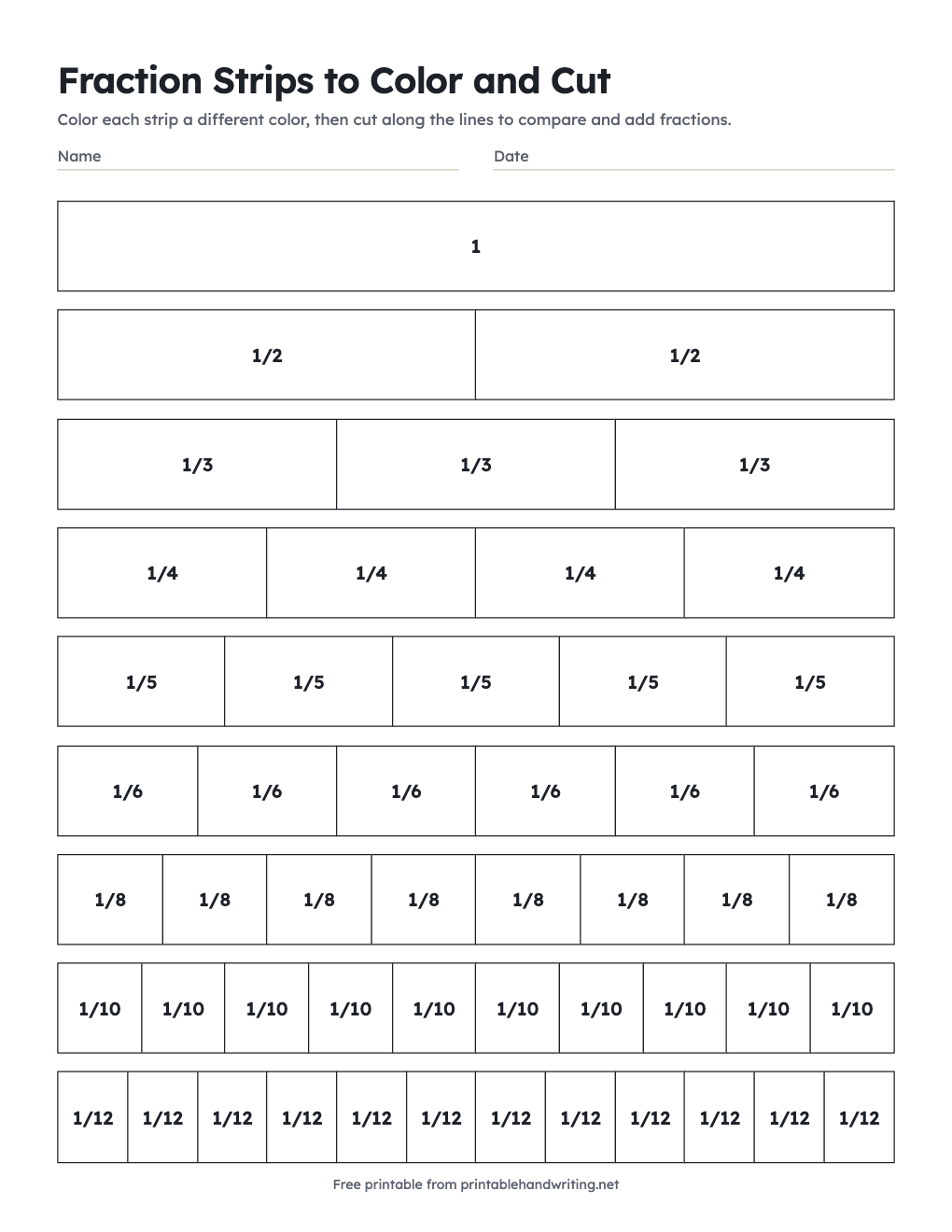
These free fraction worksheets use fraction strips, so children can see each fraction as part of a whole. They go from naming and shading fractions to equivalent fractions and comparing fractions, then to writing fractions as decimals and percents. Each sheet has an answer key on its second page, and the fraction chart makes a good reference to keep beside them.
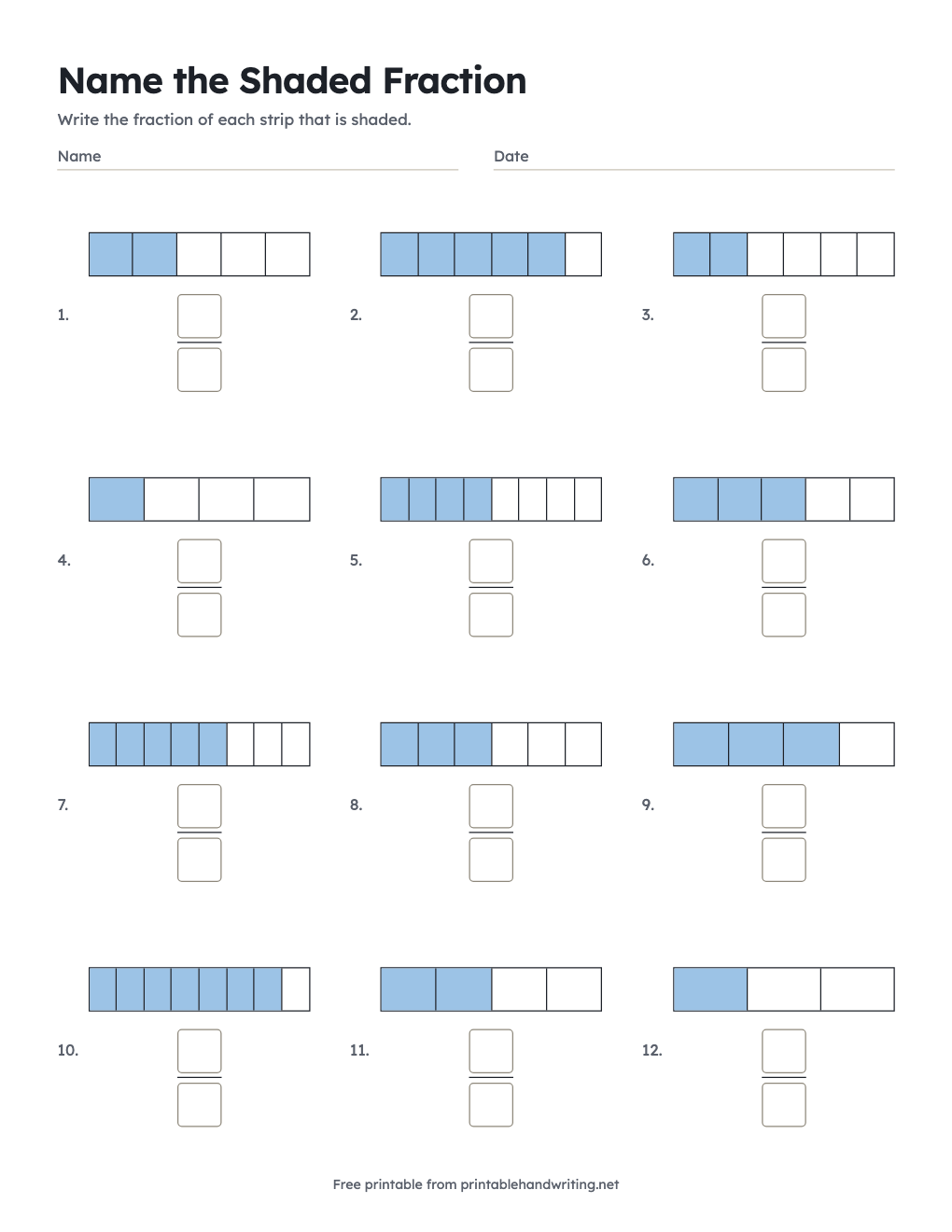
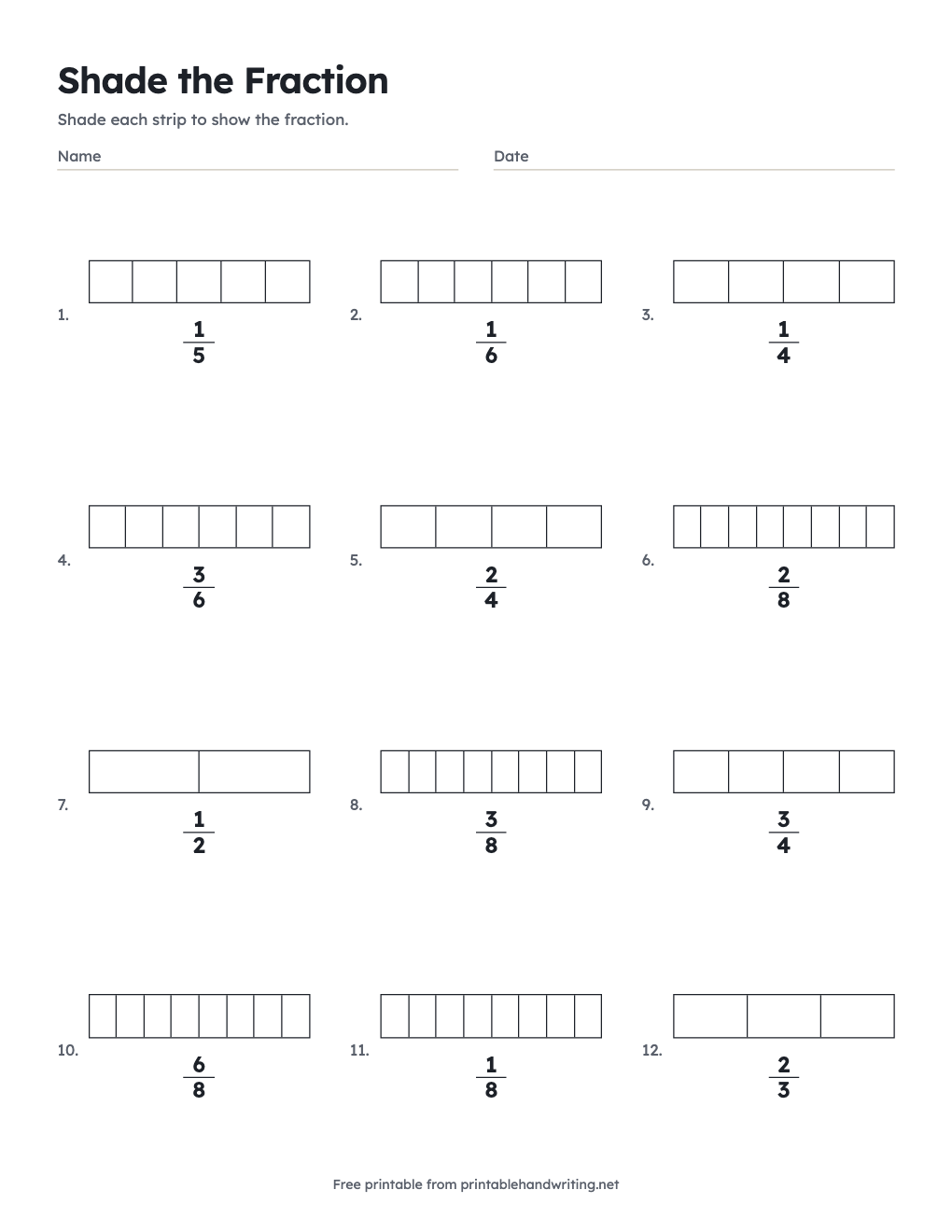
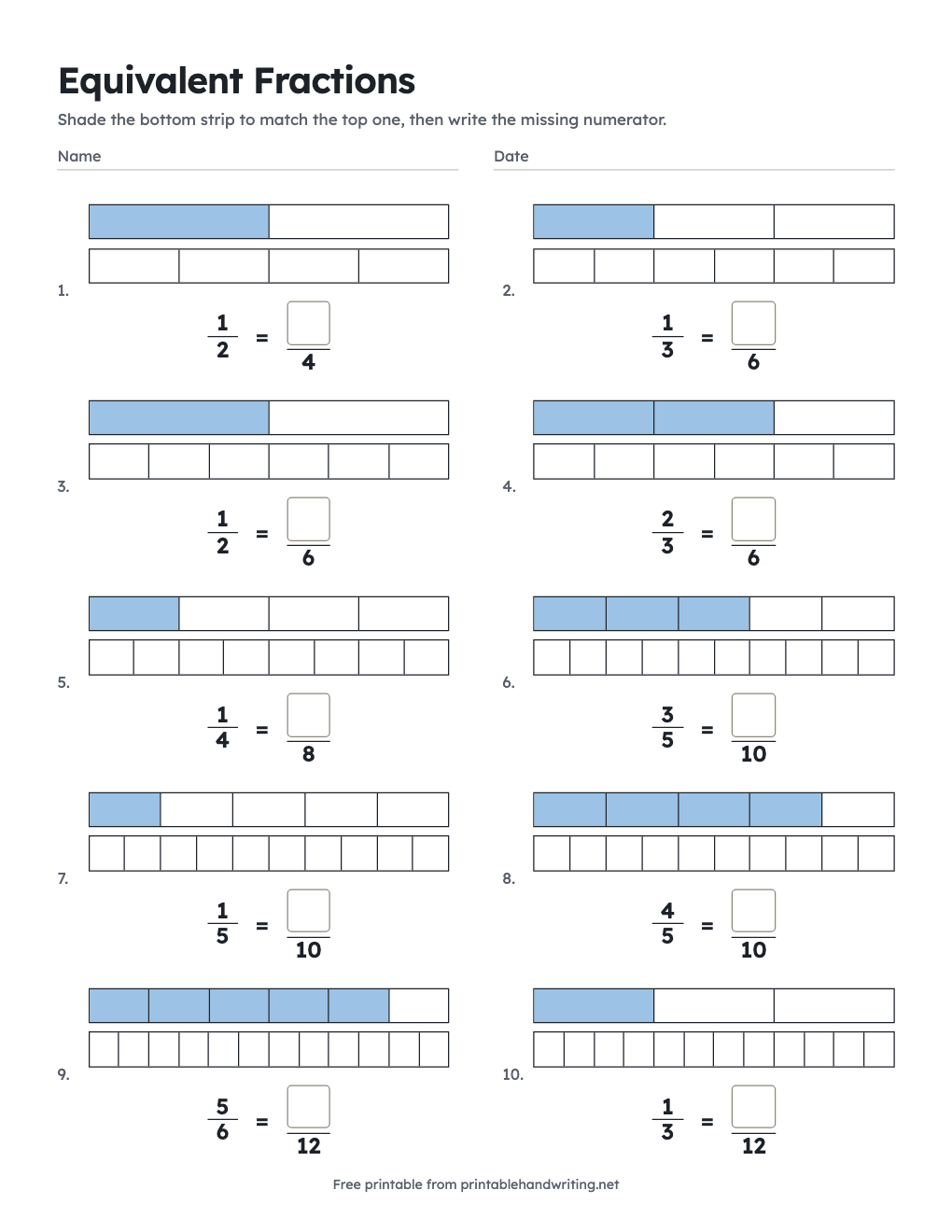
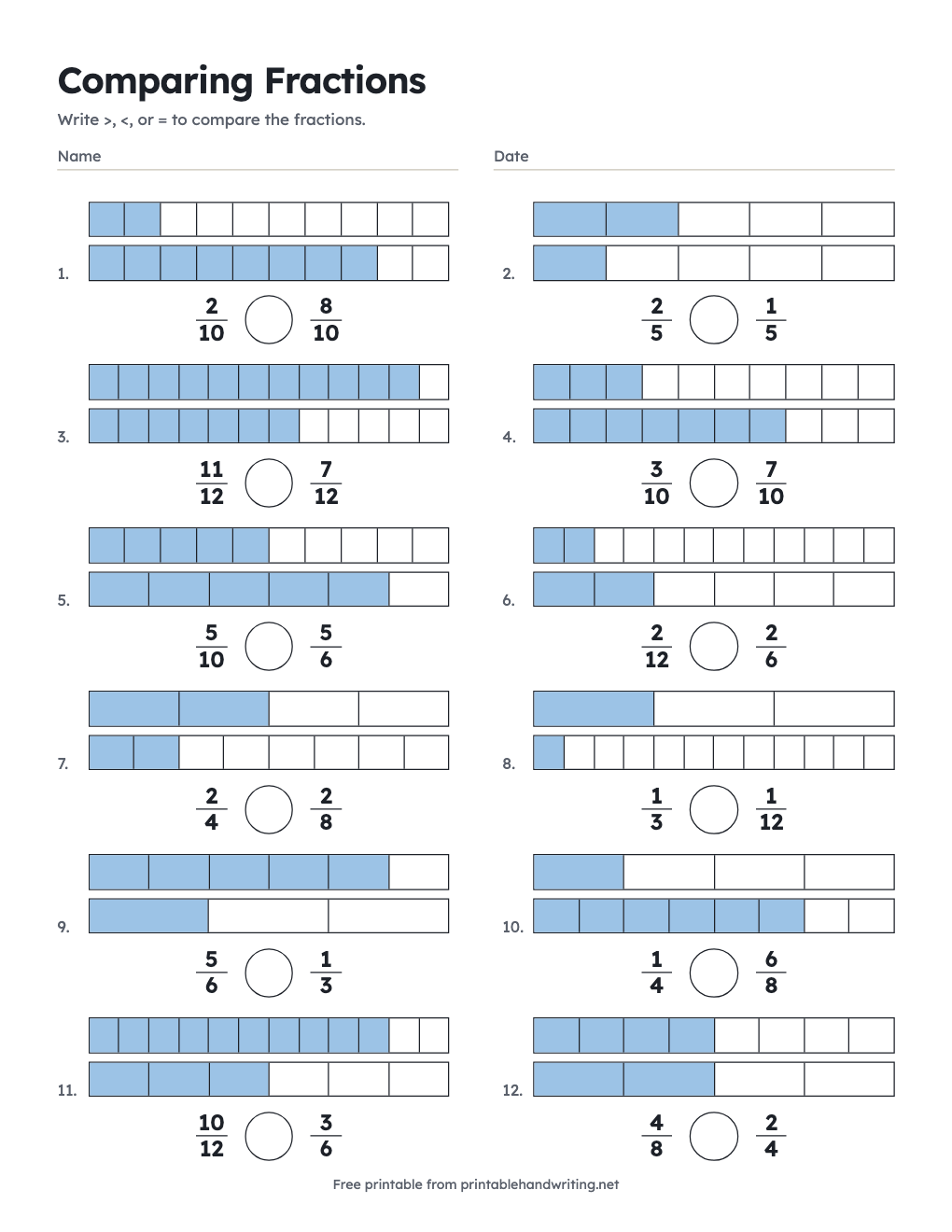
What each worksheet practices
| Worksheet | What students do | Usually taught in |
|---|---|---|
| Name the shaded fraction | Count the shaded pieces and all the pieces, and write the fraction. | Second to third grade |
| Shade the fraction | Shade a strip to show a fraction, such as 3/4. | Second to third grade |
| Equivalent fractions | Shade a second strip to match the first, then write the equivalent fraction, such as 1/2 = 2/4. | Third to fourth grade |
| Comparing fractions | Compare fractions with the same denominator, the same numerator, or different denominators, using >, <, and =. | Third to fourth grade |
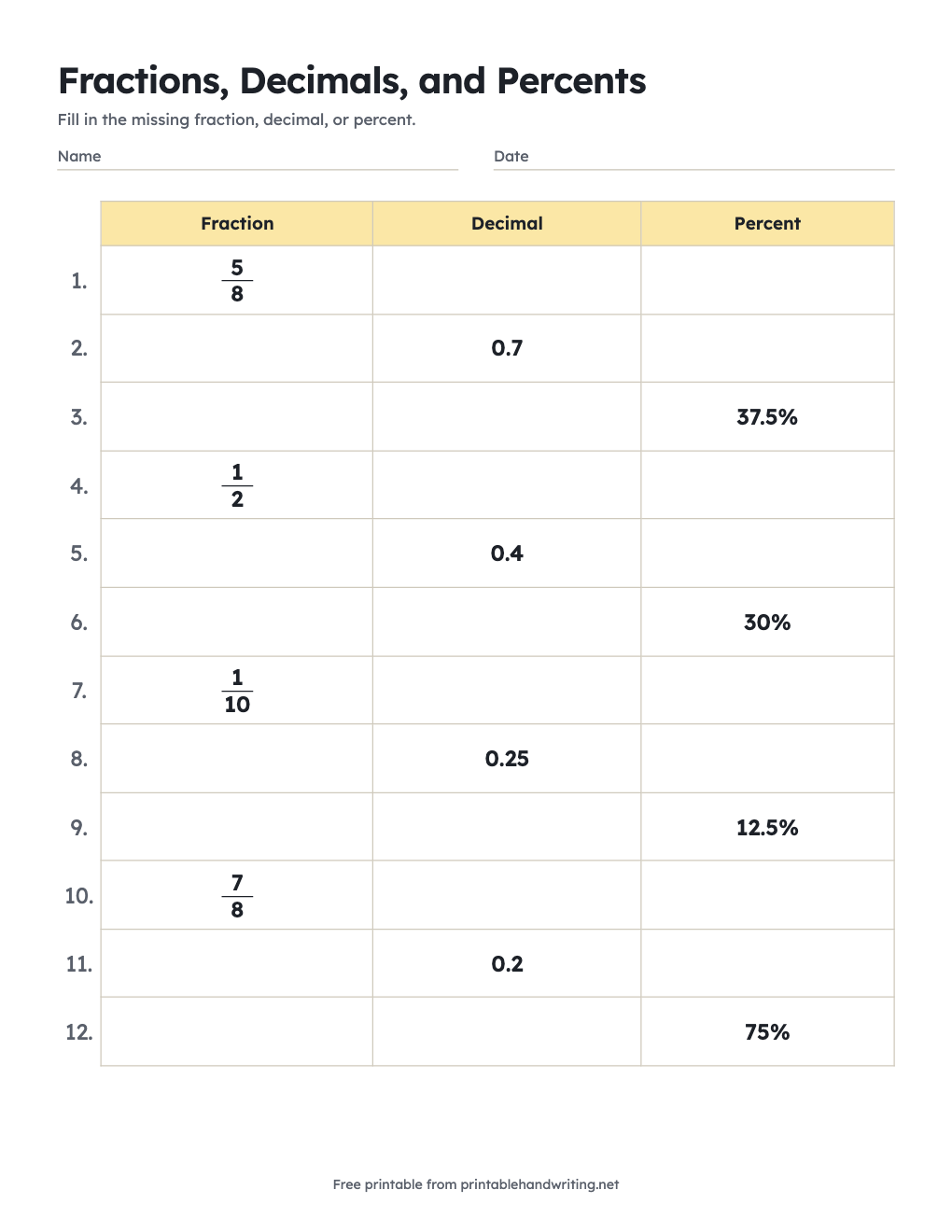
| Fractions, decimals, and percents | Write a fraction as a decimal and a percent, or the other way round, such as 3/4, 0.75, and 75%. | Fourth to sixth grade |
How to compare fractions
- Same denominator: the pieces are the same size, so more pieces is more. 5/8 > 3/8.
- Same numerator: there are the same number of pieces, so smaller pieces make a smaller fraction. 2/6 < 2/3, because sixths are smaller than thirds.
- Different numerators and denominators: rewrite both with a common denominator, then compare. 2/3 = 8/12 and 3/4 = 9/12, so 2/3 < 3/4.
- Equivalent fractions are equal even though they look different: 4/8 = 2/4.
Common mistakes
- Thinking a larger denominator means a larger fraction. 1/8 is smaller than 1/4, because the whole is cut into more pieces.
- Counting only the unshaded pieces for the denominator. The denominator is the total number of equal pieces.
- Adding the same number to the top and bottom: 1/2 is not equal to 2/3. Multiply or divide both by the same number instead.
- Forgetting that the pieces must be equal. A fraction names equal parts of a whole, which is why the strips are already divided.
Fractions in the standards
In the Common Core standards, second graders split shapes into halves, thirds, and fourths (2.G.A.3). Third graders write fractions, find simple equivalent fractions, and compare fractions with the same numerator or the same denominator (3.NF.A.1 and 3.NF.A.3). Fourth graders explain why fractions are equivalent, compare fractions with different numerators and denominators (4.NF.A.1 and 4.NF.A.2), and write tenths and hundredths as decimals (4.NF.C.6). Percents follow in sixth grade (6.RP.A.3c).
Questions
- Are the fraction worksheets free?
- Yes. Every worksheet on this page is a free PDF in US Letter or A4, with no account and no watermark, and each one includes an answer key page.
- What grade are these fraction worksheets for?
- Naming and shading fractions suit second and third grade. The equivalent and comparing fractions sheets suit third and fourth grade, and the decimals and percents sheet suits fourth to sixth grade.
- How do you find an equivalent fraction?
- Multiply or divide the numerator and the denominator by the same number: 2/3 × 4/4 = 8/12, so 2/3 and 8/12 are equivalent. On the worksheet, the shaded parts of both strips end at the same place.
- Why do the worksheets use fraction strips?
- A strip shows a fraction as a length, so equal and larger fractions are easy to see: pieces that end at the same place are equal. Strips are a common first model for fractions, and they lead on to number lines.