Place value worksheets
Place Value Worksheets
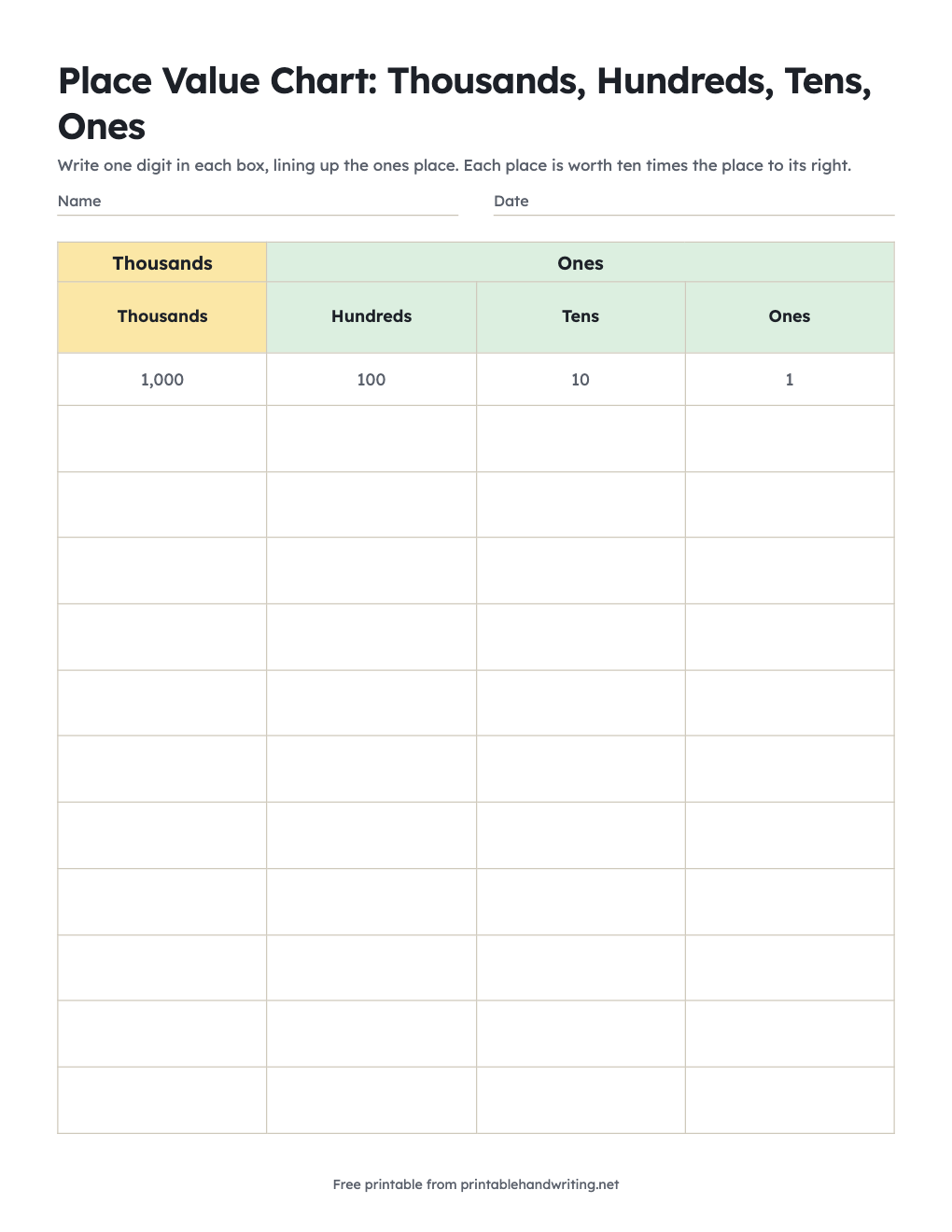
These free place value worksheets practice reading what each digit in a number is worth. They start with tens and ones, move on to hundreds and thousands, and finish with expanded form, standard form, and comparing numbers. Each sheet has 16 problems and an answer key on its second page. For a reference to keep beside them, print the place value chart.
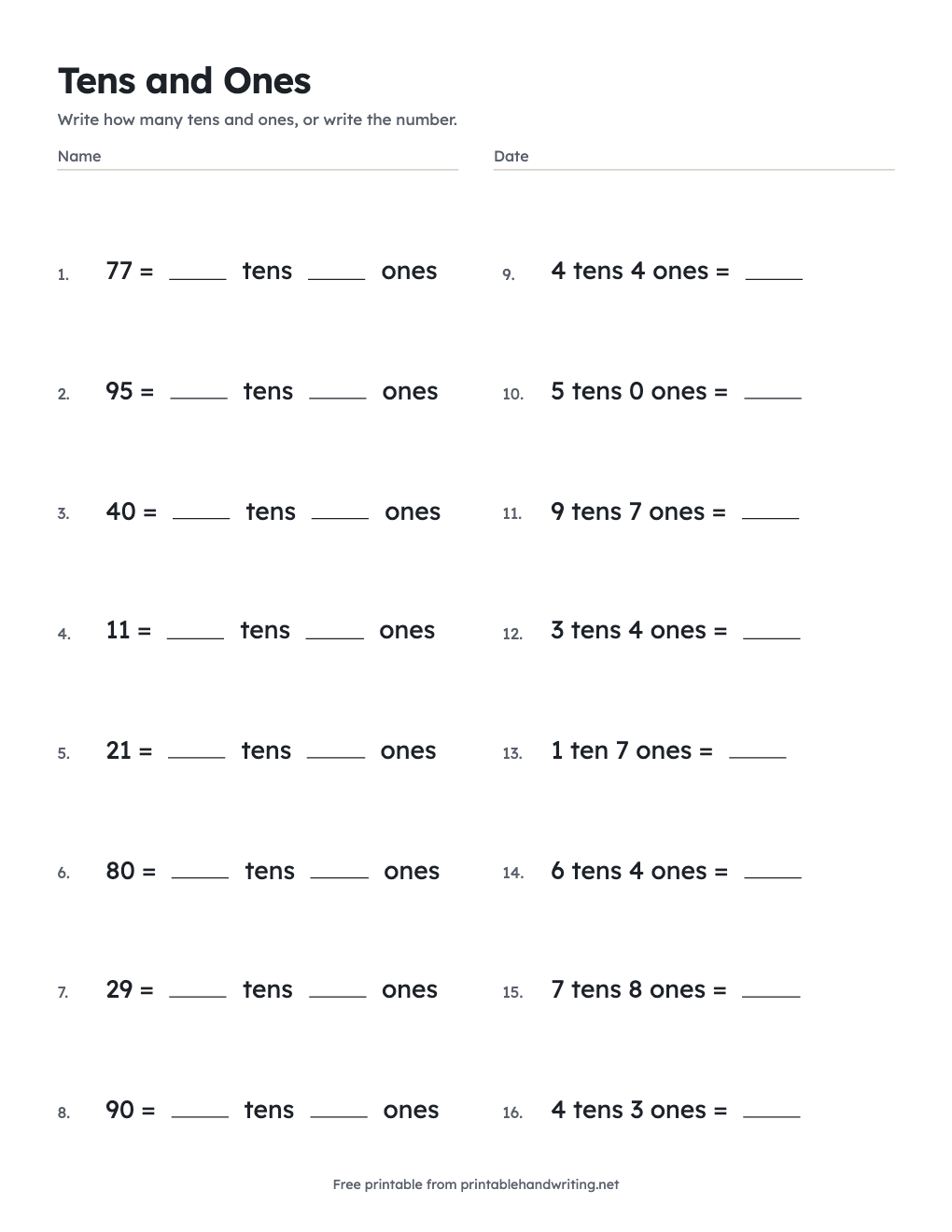
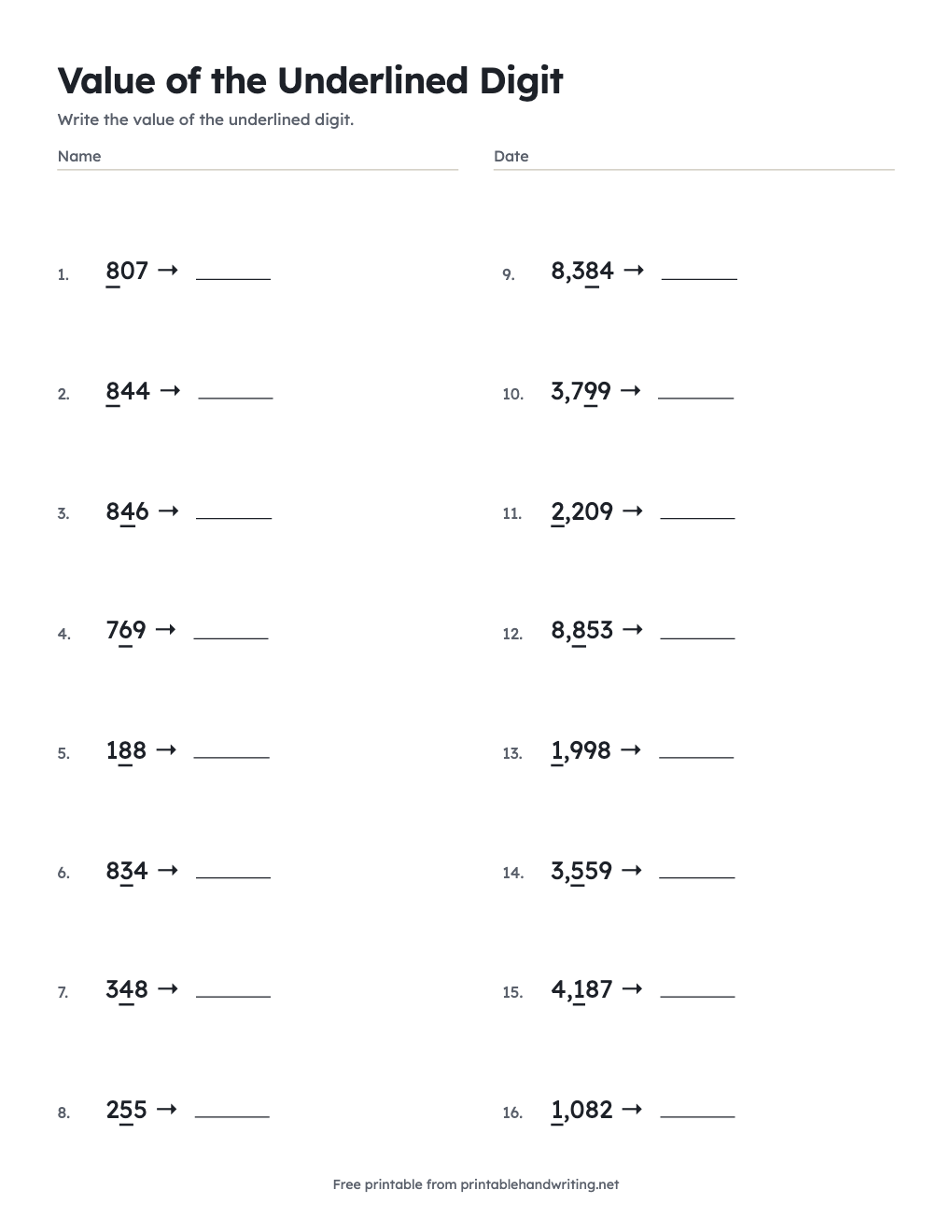
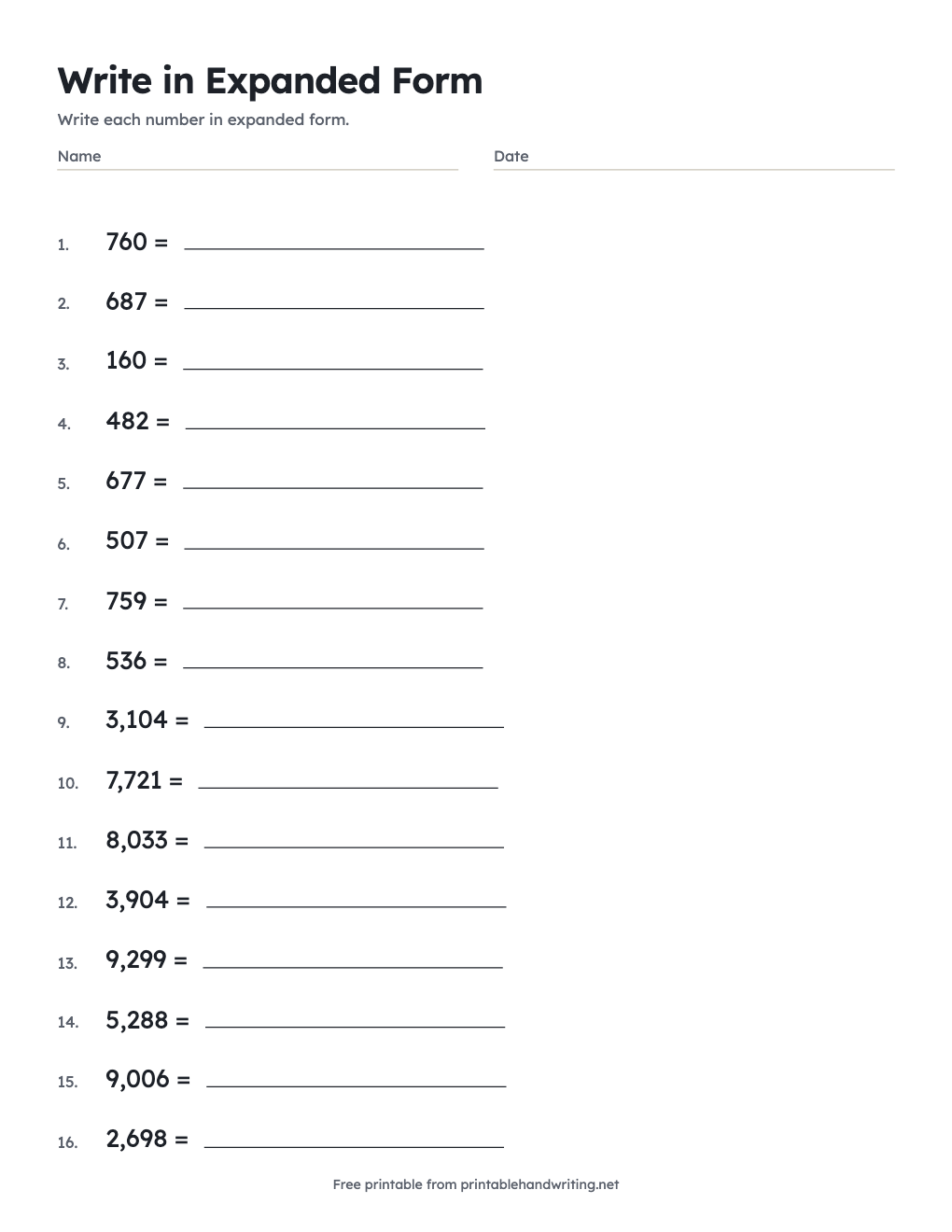
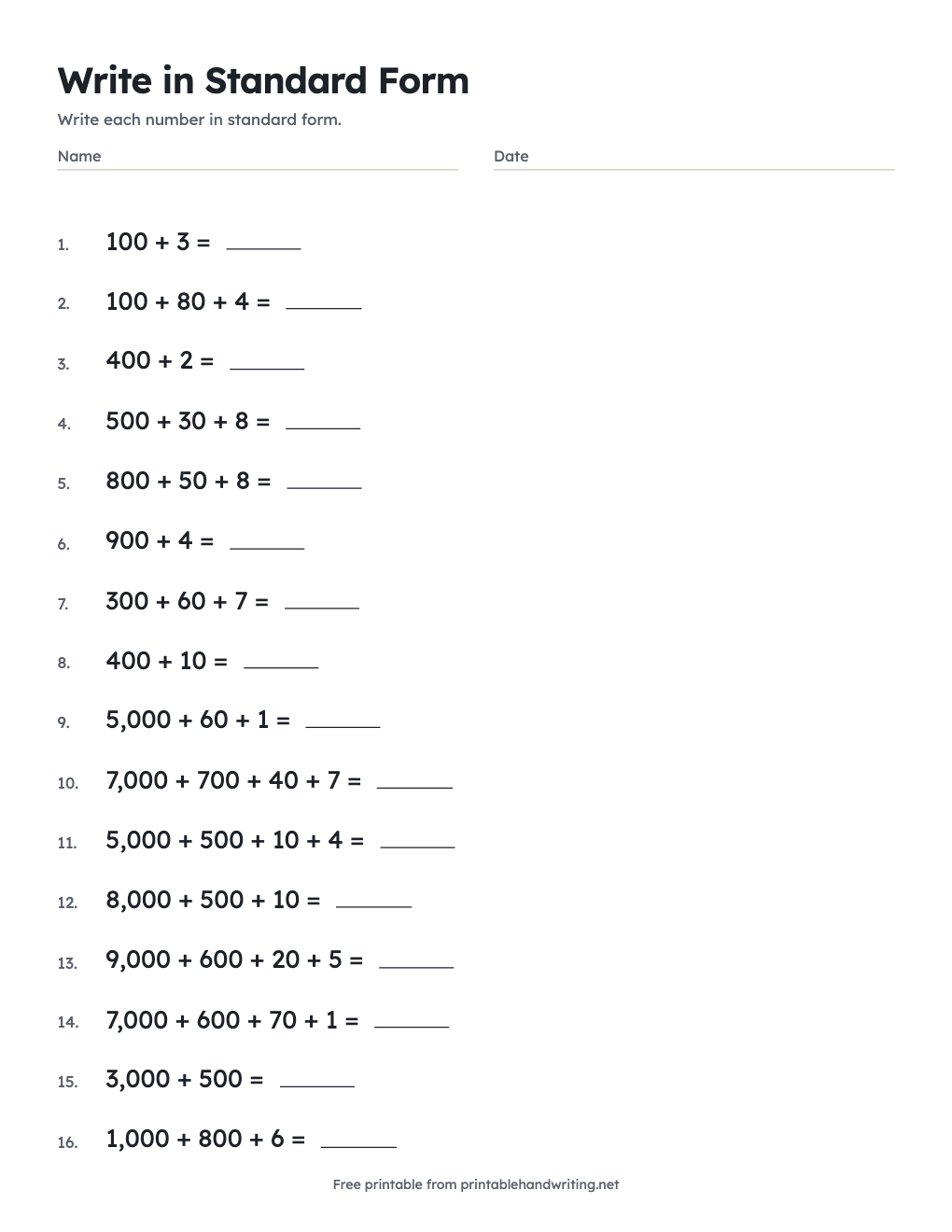
What each worksheet practices
| Worksheet | What students do | Usually taught in |
|---|---|---|
| Tens and ones | Split a two-digit number into tens and ones, and build a number from tens and ones. | First grade |
| Value of the underlined digit | Name what one digit is worth in a three- or four-digit number. | Second to fourth grade |
| Expanded form | Write a number as the sum of its digit values, such as 4,000 + 300 + 2. | Second to fourth grade |
| Standard form | Turn an expanded form back into a number, including numbers with a zero. | Second to fourth grade |
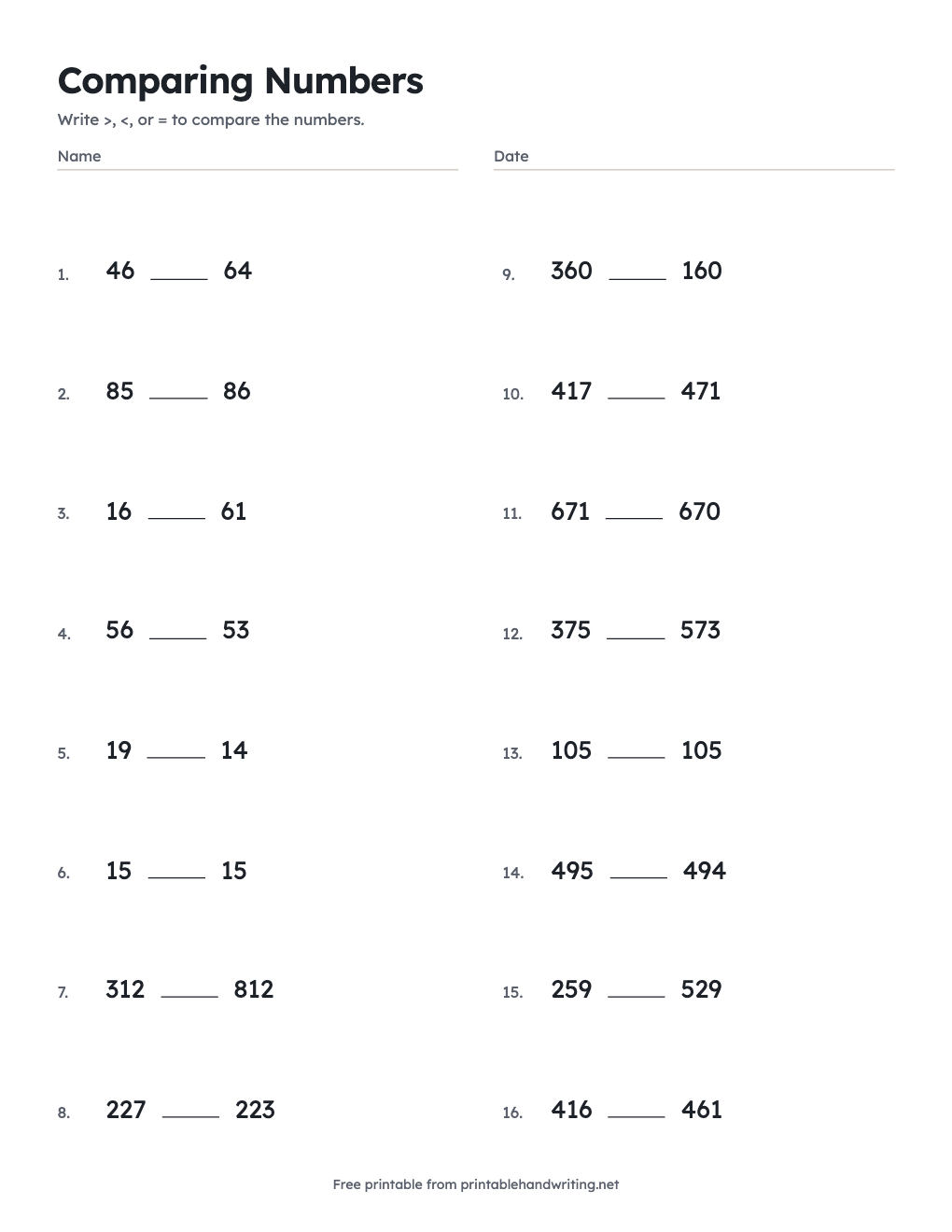
| Comparing numbers | Compare two- and three-digit numbers with >, <, and =. | First to second grade |
Tips for teaching place value
- Use objects before paper: bundle straws or snap cubes into tens, so 34 is three bundles and four loose ones.
- Say the value, not just the digit. In 482, the 8 is eighty, not eight.
- Watch the zeros. A child who writes 5007 for five hundred seven is writing each part they hear; expanded form, 500 + 7, shows why the 7 belongs in the ones place.
- Compare from the left. Look at the largest place first, and move right only when those digits match.
Place value in the standards
In the Common Core standards, first graders learn that a two-digit number is made of tens and ones and compare two-digit numbers with >, =, and < (1.NBT.B.2 and 1.NBT.B.3). Second graders extend this to hundreds, read and write numbers to 1,000 in expanded form, and compare three-digit numbers (2.NBT.A.1, 2.NBT.A.3, and 2.NBT.A.4). Fourth graders work with multi-digit whole numbers up to 1,000,000 (4.NBT.A.2).
Questions
- Are the place value worksheets free?
- Yes. Every worksheet on this page is a free PDF in US Letter or A4, with no account and no watermark, and each one includes an answer key page.
- What is expanded form?
- Expanded form writes a number as the sum of the values of its digits: 4,382 is 4,000 + 300 + 80 + 2. Digits that are zero are left out, so 507 is 500 + 7.
- What is the difference between standard form and expanded form?
- Standard form is the usual way of writing a number with digits, such as 3,500. Expanded form breaks it into the value of each digit: 3,000 + 500.
- Which worksheet should my child start with?
- Start with tens and ones in first grade, or whenever a child still counts objects one by one. Move on to the underlined digit and expanded form sheets once they can explain that the 3 in 34 means 30.